
Workflow Your Way
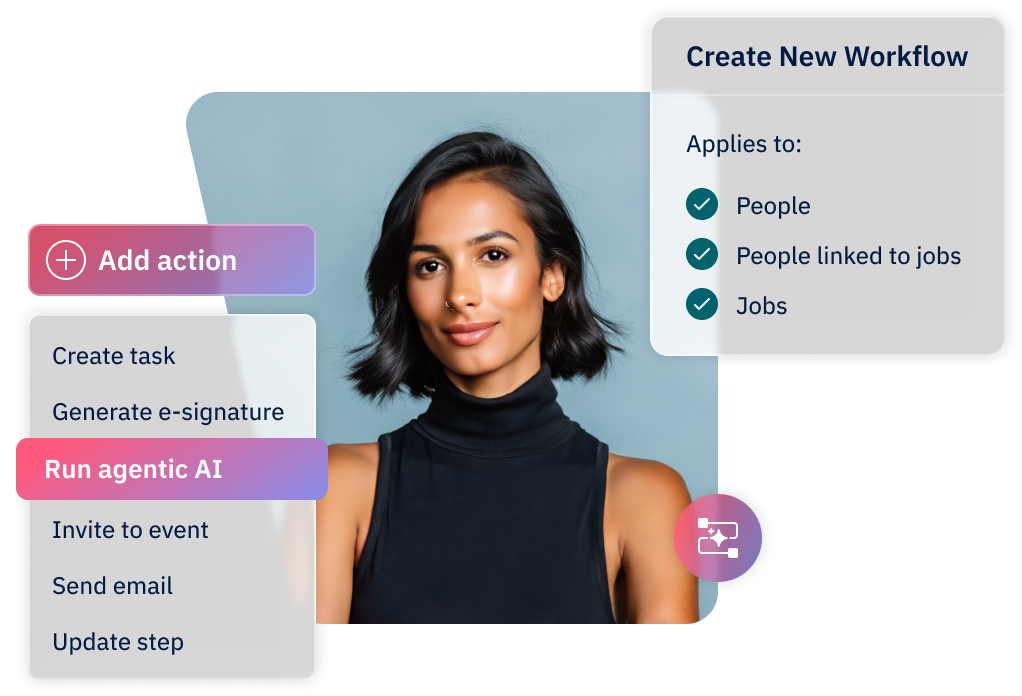
With Avature DNA, you can build from scratch or select best-practice workflows and adjust them to match your vision.
With Avature DNA, you can build from scratch or select best-practice workflows and adjust them to match your vision.
Shift repetitive, low-value tasks to embedded agents and free your team to focus on activities that require a human touch.
Used by the world's most complex organizations, Avature DNA allows you to create applications that are functionally robust, highly secure and fully scalable.
Automate complex processes using our vibe-code interface, no-code tools, menu driven configurations and process templates.
Select AI agents from our library and insert them into workflows. Embedded agents can analyze, compare, summarize and supplement information throughout your processes for maximum impact.
Seamlessly connect workflows to external systems using traditional integrations, or use Agent-to-Agent and Model Context Protocols to connect to other systems.
Track progress in real-time, spot delays and optimize performance continuously with our intelligent analytics and AI governance tools for complete control over your AI use.

The biggest difference that Avature has made for us is that it's very customizable and we can continue to iterate and continue to implement as we use it and grow as a company.”
Director of Talent Operations
 Watch Video

We have companies and units in Germany, but also in China and the US, so you can imagine the needs for data privacy regulations are extremely different. Having a flexible data privacy workflow in place, Avature really helped us tackle those challenges.”
Head of Quality, Efficiency and Innovation
 Watch Video

The power to auto-populate fields and create actions that will generate automated workflows for your candidates, your hiring managers and anyone really using the tool has been one of the biggest eye-opening pieces of the Avature offering. The automation within Avature has allowed us to save hours of typically manual processes, and those hours have obviously translated into money savings as well.”
Senior IT Manager
 Watch Video
Yes. The Avature workflow engine is highly configurable, allowing you to build out different workflows for any audience you like, including different business units, regions, roles, job families, seniority, or any other attribute you deem relevant.
With Avature’s role-based permissions, you decide exactly who can create, edit or publish workflows. Sandboxing and version control let you test changes before going live, ensuring every update is safe and auditable.
Avature’s robust workflow engine enables you to automate a wide range of actions, including sending emails or invitations, attaching a form, moving a person through a workflow or linking them to another project, updating a field and creating a task, just to name a few.
Given the flexibility of the workflow engine, you can set up any process you like in Avature. Leading organizations typically set up talent processes, such as end-to-end hiring and talent management processes. Avature can also support compliance, for example, consent processes for data privacy and processes that help keep your database updated with the latest and most accurate data.
Yes. The workflow engine is built to handle large-scale, multi-region operations, with support for multiple time zones, languages and compliance frameworks.
Yes. Avature workflows can exchange data with your other systems in real time via APIs, webhooks, native integrations or, if you are using AI agents, using MCP. Workflows can trigger external actions and respond to events from other systems.
Yes, but only if you want them to. With Agentic Automation, you can embed generative AI into your workflows, whether for drafting personalized communications, summarizing interview feedback or assisting with screening, while keeping humans in control.
Agentic automation allows workflows to make context-aware decisions, initiate follow-up steps, or gather information on their own—without requiring human intervention. It adds a layer of intelligence to automation, improving responsiveness and reducing manual effort.