From intent to action. From agent action to human understanding.
The agentic ecosystem connecting people, agents and systems.
The agentic ecosystem connecting people, agents and systems.
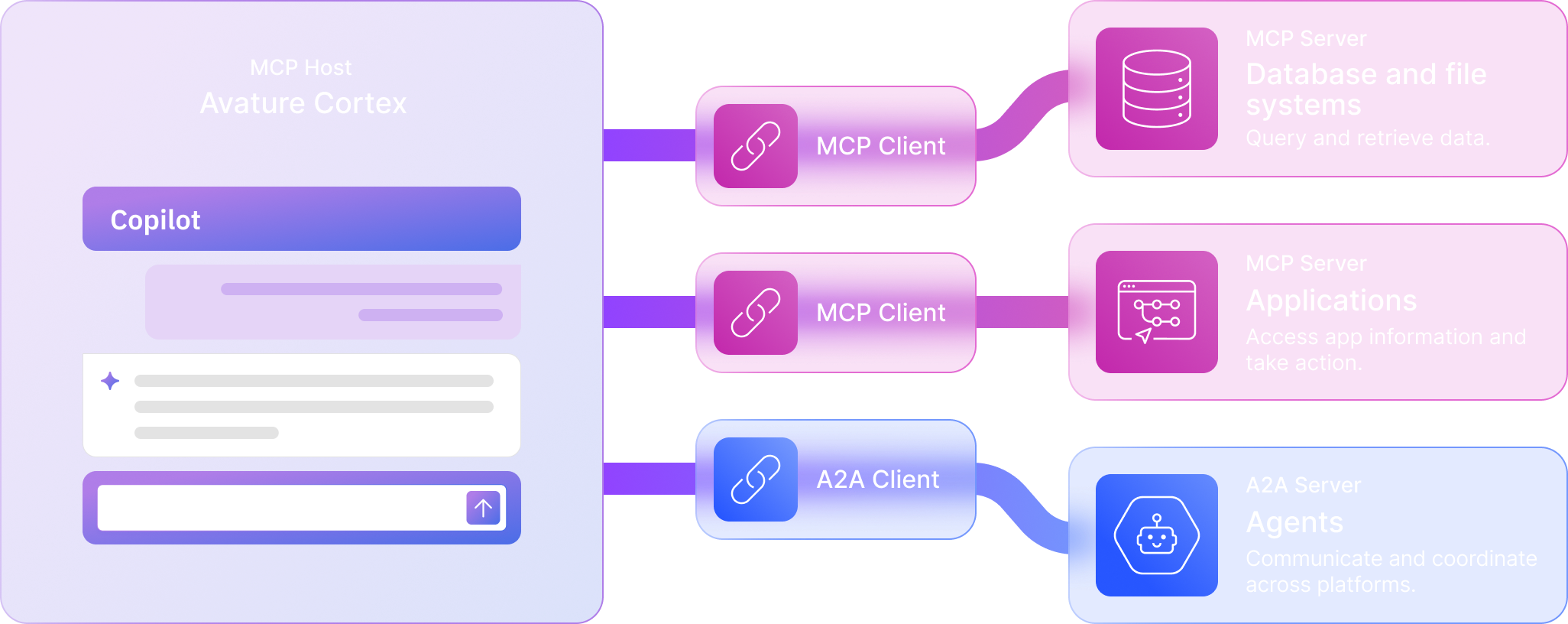
 Understands goals, preferences and constraints
Explains actions, results and exceptions
Turns intent into tasks for specialized agents
Applies policies, permissions and approvals
Coordinates agents, tools and workflows
Carries context across interactions
Reaches applications and legacy systems
Tracks agent activity, spend controls and performance
Our host uses MCP (Model Context Protocol) to access external tools and data, and A2A (Agent2Agent) to work with other agents when needed. It manages these connections and applies predefined permissions and security policies, giving users controlled access to wider capabilities through a single interface.
Conversation becomes the entry point to enterprise execution. You describe the goal in plain language then Cortex breaks it down into atomic tasks, maps what needs to happen and when and then brings together the right agents, applications and people to deliver it.
Each task is assigned for optimal performance: to a specialized agent with the right skills, tools and model; to a person when judgment matters; or to a deterministic application workflow when the path should stay fixed. Cortex keeps the whole team working toward the outcome.
To get work done, AI needs more than access to databases and records. Cortex builds deep enterprise context, a living model of your organization from its configuration, data model and workflows, so agents understand what records mean, how processes connect and how to execute tasks in line with your operating model.
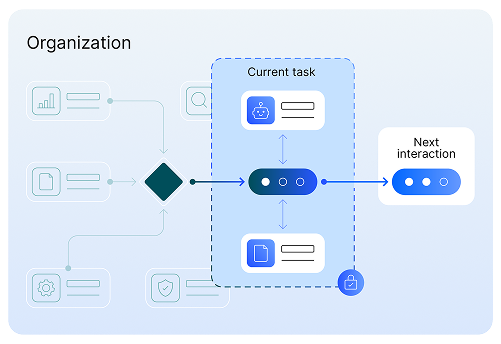
At runtime, each agent retrieves only the enterprise and record context relevant to its task, within its permission boundaries. Cortex carries memory and state across interactions, so work can continue without losing its place.
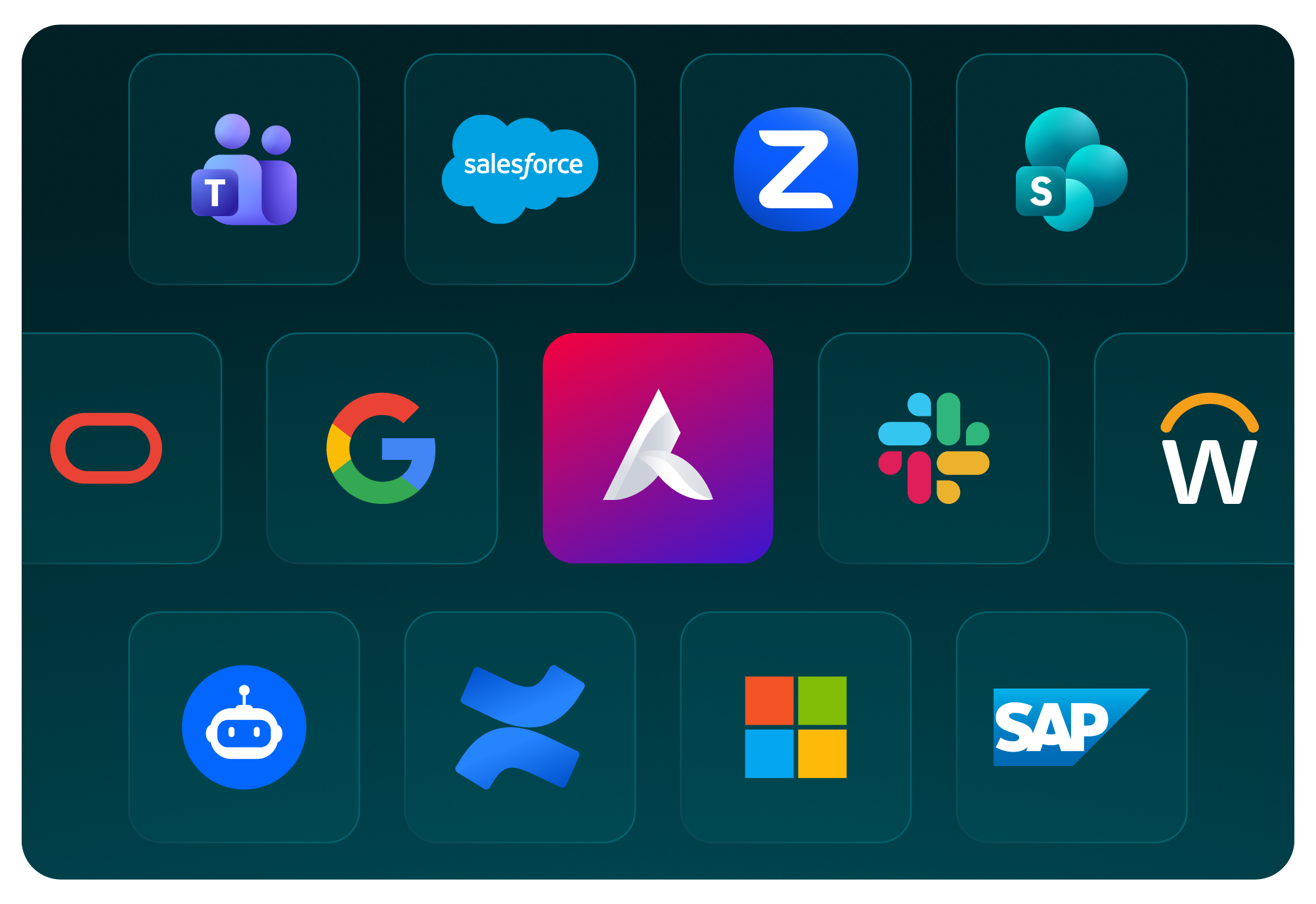
Work rarely happens in one place. Cortex connects agents to one another and to applications across your stack through connectors, MCP servers and Avature’s integration framework.
Cortex coordinates each handoff and carries the right context and results from one system to the next, so teams do not have to manage transitions across disconnected tools.
For legacy systems without agentic interfaces, Cortex can use purpose-built bots to work through their existing interfaces and complete the required steps.
Avature’s Model-as-a-Service architecture brings leading commercial and open-weight models, so you can benefit from advances without having to manage each model separately.
We offer fine-tuning services that adapt models to your terminology and specialized tasks, improving performance where general-purpose models fall short.
We also offer pretraining services to develop your proprietary models trained on your intellectual property. This turns organizational knowledge into unique AI capabilities that give you a lasting competitive advantage.
Cortex applies a unified control plane to every agent, including third-party agents wherever they operate. A shared foundation of policies and rules gives you greater control over data privacy compliance, cost and output quality.
Give each agent a defined identity, permissions, allowed actions and approval requirements. These adaptable rules keep cross-system actions within approved boundaries.
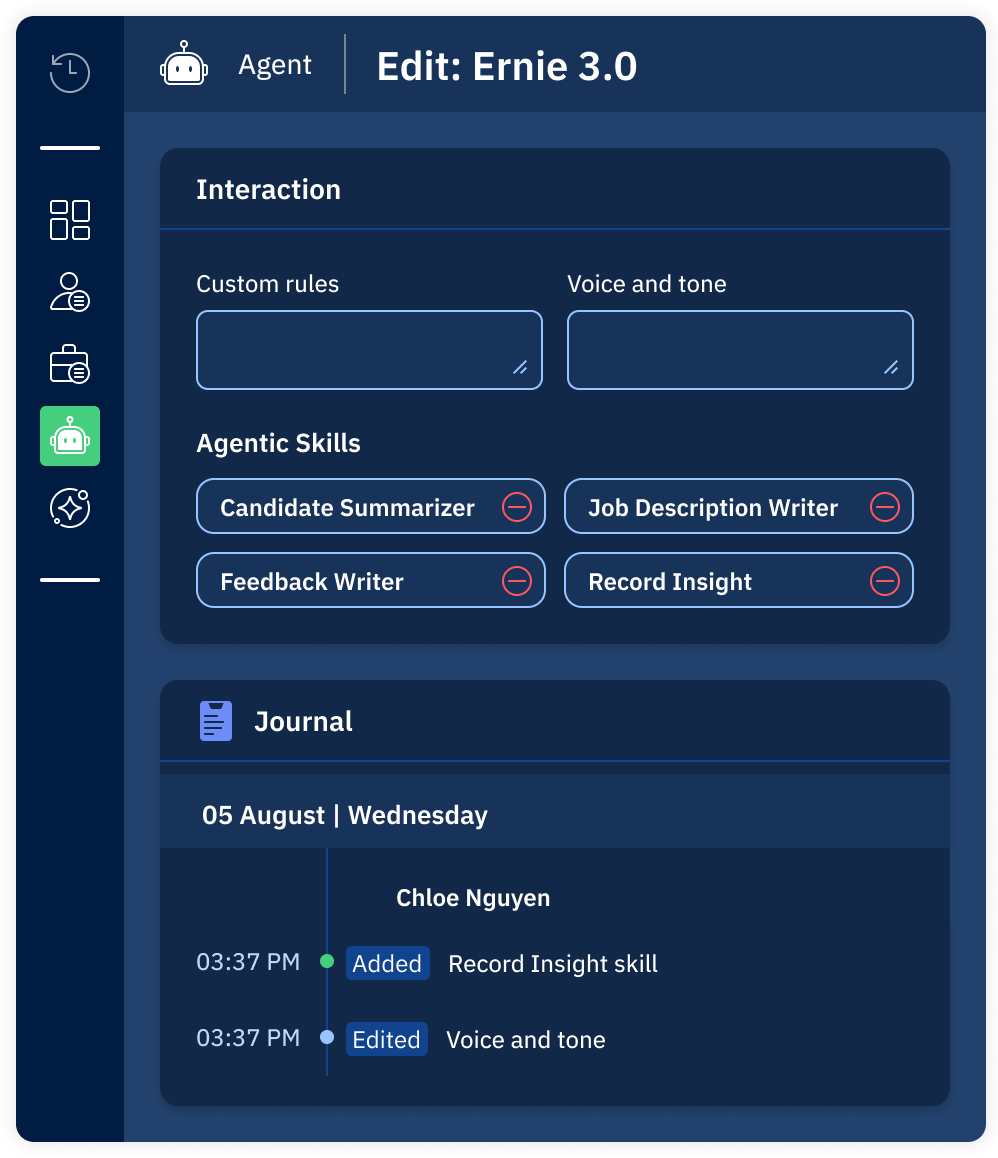
Use Avature Agent Builder to create agents with the skills required for specific tasks, then manage them through the Agent Library. Store, update and retire agents, preserve their build and run histories and share them with authorized users across the enterprise.
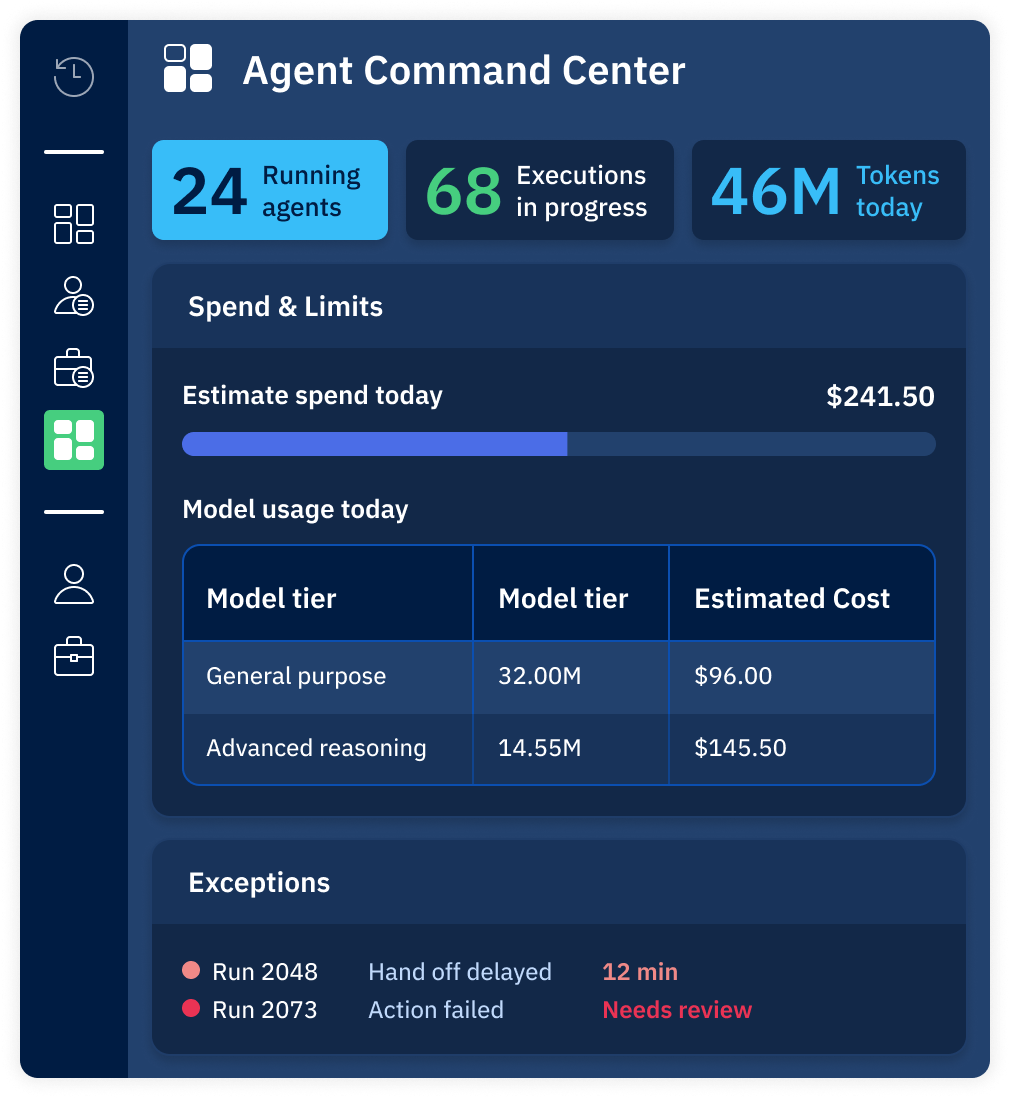
The Agent Command Center gives IT teams a unified control plane for running agents and autonomous actions, with visibility into the models they use, token consumption and cost.
Built-in diagnostics go beyond alerts, enabling IT teams to troubleshoot across multi-system processes and to quickly locate bottlenecks, failures and affected handoffs.
Hard and soft budget limits keep usage within set boundaries. Cortex also creates cost sub-ledgers that can be exported through APIs to spreadsheets and financial systems.
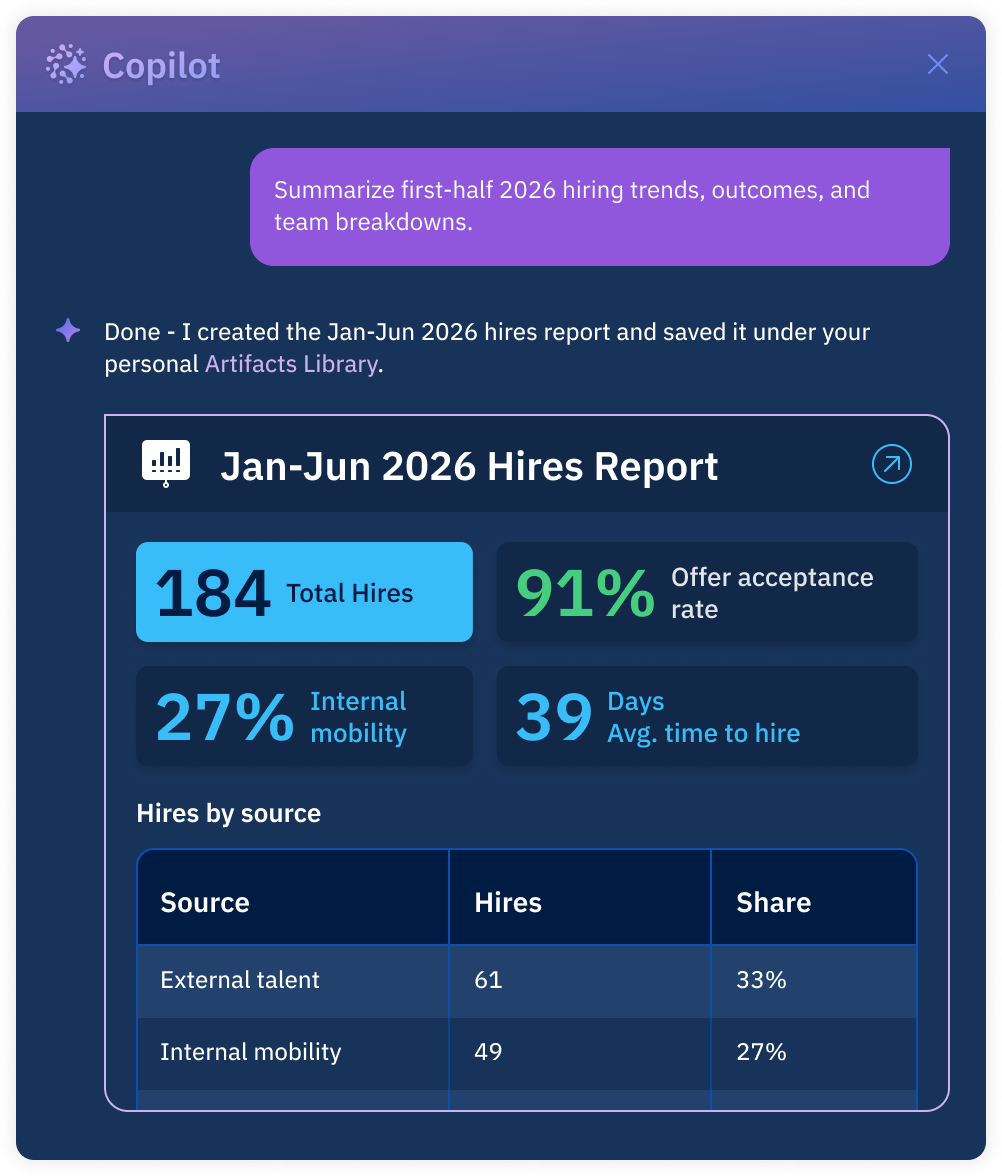
Cortex presents critical data and insights in clear, reusable outputs. These artifacts can be stored and reused to improve performance and reduce compute costs. Authorized users can explore them further through Avature’s Data Lake, Lakehouse and Superset tools.
Every execution reveals the decisions made, the results produced, the practices that worked and the exceptions encountered. Cortex captures this evidence as work unfolds, and the DNA Platform preserves it as proprietary knowledge that people and agents can apply to future assignments.
Discover the power of the well-managed agentic workforce.
Express what you need in natural language and shape intent into a plan grounded in your work.
Build and adapt specialized agents for specific roles. Give them the prompts, context, skills and tools to behave predictably and carry long-running tasks through to completion.
Find and reuse agents for specific tasks. Authorized users can share agents across the organization to expand your team’s capabilities, with a complete history of every change.
Embed agents in structured workflows and keep critical processes consistent and predictable.
Store outputs created during execution, such as dashboards, reports and documents. Reuse and update them to avoid repeated work and reduce compute costs.
Capture what the organization learns from execution, so people and agents can apply it to every plan that follows.
Cortex uses the business context customers have already defined in Avature to plan and coordinate work across AI agents, applications and people. It lets users direct work and understands agent activity and outcomes, while giving IT teams control and visibility over execution.
The distinction starts with the foundation customers have already defined in Avature: their data models, workflows, business rules and permissions. Cortex uses that foundation to coordinate specialized agents, people and application workflows in line with how the organization operates.
A general-purpose AI assistant commonly starts with a user prompt; Cortex can also begin work when an event occurs or an existing process calls for it. Cortex carries context across handoffs, applies the relevant permissions and approval requirements, and reports progress or obstacles so people can intervene when needed.
A typical execution works like this:
Cortex connects agents to one another and with applications across an enterprise stack through connectors, MCP servers, and Avature’s integration framework.
For legacy systems without agentic interfaces, Cortex can use purpose-built bots to work through their existing interfaces and complete the required steps.
Cortex coordinates handoffs and carries context and results from one system to the next.
Cortex applies shared policies to agents, including third-party agents, wherever they operate. These policies can cover data privacy, cost and output quality. Teams can define each agent’s identity, permissions, allowed actions, and approval requirements, keeping cross-system actions within approved boundaries. Cortex can also route work to a person when judgment matters or when a process requires human review.
Avature Agent Builder enables organizations to create and customize specialized AI agents by defining their prompts, context, skills and tools for specific tasks.
The platform also offers a Model-as-a-Service (MaaS) architecture with access to commercial and open-weight AI models, alongside fine-tuning and pretraining services for organizations with specialized AI requirements.
Through the Agent Library, teams can store, update, retire and reuse agents, share them with authorized users and maintain a history of changes.
Cortex builds enterprise context from an organization’s configuration, data model and workflows, helping agents understand what records mean, how processes connect and how tasks should be executed.
Cortex enables agents to retrieve the enterprise and record context relevant to each task, within their permission boundaries. It also preserves memory and state across interactions, allowing work to continue across multiple steps without losing context.
The Agent Command Center shows IT teams which models agents use, along with token consumption and cost. Built-in diagnostics help teams find bottlenecks, failures and affected handoffs across multi-system processes. Hard and soft budget limits help keep usage within set boundaries. Cost sub-ledgers can be exported through APIs to spreadsheets and financial systems.