Dimitri Boylan
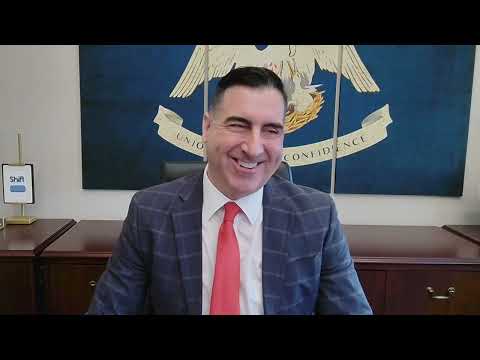
Welcome to another episode of the Talent Transformation Podcast. Today we are joined by Byron Decoteau, Jr. and Nicole Tucker. Byron is the director of the Louisiana State Civil Service and Nicole is the Chief Operating Officer of the Louisiana State Civil Service. So welcome both of you to the Talent Transformation Podcast.
Byron Decoteau Jr.
Thank you. it’s Great to be here.
Nicole Tucker
Thank you.
Dimitri Boylan
So you are the first guests that we’ve had from the state government. So, maybe Nicole, if you could just give us a little background on what you do, how well you’ve been doing it, and then maybe Byron, you can jump in and tell us a little bit about yourself.
Nicole Tucker
So, I’ve been with the state government for 14 years now, and I’ve been the chief operating officer for about five now in this role. And as the chief operating officer, I oversee several of the divisions here in state civil service, including talent acquisition, the compliance and audit, which is, you know, regulatory, making sure that the rules are followed in our HR community. The policies that we create, compensation and classification, that’s something that I also oversee here in our department as well.
Byron Decoteau Jr.
I’m currently the Director of the Louisiana State Civil Service System. So I serve as the secretary of the State Civil Service Commission, which is a seven-member board that reports to our governor, who is appointed by our governor, excuse me. And we are responsible for administering Louisiana’s state civil service system, or merit system, for those who are not familiar with government. It’s basically a human resources program that is run for the citizens of our state.
Dimitri Boylan
Give me an idea, how many employees are we talking about in the state?
Byron Decoteau Jr.
So in state government, we have two types of employees, and in the civil service system, we oversee classified employees. So that’s roughly about 39,000 employees.
And then in the unclassified service, which is typically higher education and political appointees, we have another 30,000, approximately, of those employees. It’s a very, very large-scale workforce.
Dimitri Boylan
Okay, so that’s pretty substantial, right?
Byron Decoteau Jr.
Yeah.
Dimitri Boylan
That’s almost 80, 70, 80,000. So, let’s talk about just the state itself, Louisiana. In what ways are you sort of different from the other states around you?
Byron Decoteau Jr.
I would say we all share something in common, that we run human resources programs. And the difference is the way that our systems are set up.
There are probably a handful of maybe five or six states that share something in common with Louisiana, and that is our constitution. We are defined in our state’s constitution, and that’s due to Louisiana has had a colorful history in the past with state government, and the citizens wanted to ensure that the people who were working for them, who were funding with their tax dollars, were qualified for state jobs, that they were paid in a fiscally responsible manner. So, they embedded it into the Constitution. In Louisiana, we are an independent, apolitical agency. So the governor appoints members to the board, and the board appoints me.
Dimitri Boylan
Okay.
Byron Decoteau Jr.
Yes.
Dimitri Boylan
So it’s a, it’s a different governance structure. Now, over the past few years, have you been making any particular changes to the way you operate? Most of our customers are in the middle of some kind of digital transformation.
Usually, that’s a combination of technology-driven changes. It’s also usually operational changes. They’re looking for more agility. They’re trying to be more experimentation-oriented in the way they develop their programs.
What kind of stuff are you working on in the state? What are the big things you’re working on that affect…
Nicole Tucker
So last year, I would say for us, we actually launched a big initiative called SHIFT, which is the acronym that stands for Shaping How We Invest in Future Talent here in state government. You hear a lot about how we still have handwritten exams or pre-employment exams, that’s something that we removed here in the state of Louisiana in 2024. We removed two of our major pre-employment exams. So there’s no longer any written exams, or someone needs to come to a physical building across the state, take an exam to be qualified for a job.
And then we have things that we’re shifting as well. When we removed those pre-employment exams, we then launched what we call the SCS, State Civil Service, hiring framework, which is essentially the structured hiring process for our HR community to use instead of that pre-employment exam. We have now shifted towards more competency-based and skills-based hiring. So that is something that was a major shift for us, and it’s something that we are still continuing to shift with our hiring managers on the way that they go through those applications.
Another big modernization that we did that kind of aligned with that was our minimum qualification, our MQ modernization that we also did in 2024. And that actually aligned with legislation to remove degree requirements and expand those opportunities for applicants to come into state government, for us to expand those options for our workforce. So that’s something that we did too. We reviewed over 1,900 jobs and their minimum qualifications to make sure that they align with the legislation, as well as expanding those opportunities for applicants to qualify. So I would say that was something that was major that we shifted in the past couple of years.
The other thing that we have shifted from is from paper to electronics. So when you talk about systems for our performance management system, we can call that continuous performance management. So, that was a big shift. Last year, we actually launched that electronic performance management system to allow for that easy, efficient feedback, continuous performance feedback for agencies and employees to use. So I would say that’s probably our big three things that we’ve been shifting recently. Byron, I don’t know if you have anything you want to add.
Byron Decoteau Jr.
Yeah, I think what we have been very fortunate to inherit in our roles is that our previous predecessors have set up a system whereby in the late 90s, they did a lot of efforts to decentralize some of the personnel actions, really all of the personnel actions to get them closer to the agency heads so they could make personnel decisions quickly.
You know, before, everything came through civil service, so that was transformational, and it set us up to change our culture from just being a regulatory agency to really being consultants and that has served us very well, especially being an apolitical organization and having to adapt to changes in administration. Nicole and her team have done a tremendous job of really earning the respect of the agency heads, so when we have a transition, we received a new governor two years ago, and it was a seamless transition because we knew what the agencies were going through, what their missions were and then you know, made ourselves available to the governor and his team to see, “Well, what is your mission? What is your vision? What are you trying to accomplish?”
So it’s just aligning, you know, your consultations with those agency priorities and doing it within the guardrails that we have to operate. So we’ve been really successful at that.
Dimitri Boylan
That’s pretty interesting. I didn’t think it was quite that agile. I didn’t think you were actually, you know, in that kind of scenario. Some of our commercial customers are in that scenario because they deliver services to other companies, but most of them deliver services within their own organization. And of course, they get different managers and different department heads and everything that come along. And so, where does the emphasis for SHIFT come from? Because, you know, none of what we’re talking about necessarily mandates any of that. Right.
Byron Decoteau Jr.
So, and for me, and I’ll let Nicole add in if she would like to, but we really do promote a culture in our department. And in our department, we have 105 employees, and one of our values is innovation. And we are very fortunate to have a staff that just really excels and thrives on coming up with new initiatives and trying to innovate. They really believe in government, and they want to show that government can be effective.
For us, SHIFT came at an important time. We have some political things in the environment that are going on with our system. There’s always going to be an effort to try to get some control of our system by legislators who feel that they represent the people, so they should be able to change quickly. So, for us in full transparency, it was we would like to show the public what we’re doing, and we want to be very transparent and say, “You know, in those areas that still need shifting,” you know, we’re going to own up to that and say, “Yeah, we need to move in this direction.” So, for us, it was basically a celebration of what we’ve done so far, because we have moved away from those traditional pre-employment tests. We have put a lot of work into competencies.
We’ve been working with competencies for years, and now we have the opportunity to use them in the selection process.
Dimitri Boylan
Interesting. Nicole, did you look at what other states were doing? Did you look at the commercial sector? Where do you see the ideas that you end up developing into programs?
Nicole Tucker
So absolutely looked at other states and did research. Obviously, being in the public sector, we always look at other state governments and even the federal government, sometimes just to see, as Byron said earlier, every state has their own system. They’re governed by their own system. So, when we do our research, we make sure we take that into account and see how we can use some of those innovations that they have in other states to see if they would fit here in our state. So we did look at that.
I guess 2024, 2023, we were hearing a lot from other states across the nation of removing degrees or expanding those opportunities for applicants or those STARs, which are those who are skilled through alternative routes. So that really interested us because our minimum qualifications, we already had a substitution, but we took that as an opportunity, well, maybe there’s another option or avenue that we can add for those applicants.
He talked about, you know, where did shift kind of come from? It absolutely came from our team here at State Civil Service, and we have a lot of employees who like to push us and share different ideas they come to us with. And we love it. So, you know, we entertain it. We talk to them and see what we can use. And SHIFT really was a celebration, like Byron said. You know, we’re all really good at creating those to-do lists, but then once you check everything off, we just create another to-do list. So SHIFT really helped us highlight that we’ve done a lot in the past few years, and this is kind of everything that we’ve done.
And it all aligned with the workforce, the current workforce, the needs of the workforce that’s changing and then the future workforce. So that’s why it’s kind of shaping how we invest in that future talent, because as you talked about with technology, you know, things are changing constantly, which means the workforce is changing constantly and we serve the workforce.
Dimitri Boylan
Yeah, so that’s interesting because a lot of our customers, of course, are trying to move to competency-based, skills-based taxonomies and actions that are based on those. And it’s turning out for skills and competencies to be a bigger transition than most companies thought it was going to be. Okay, you know, kind of sounds good. And, you know, you can get through the 30-minute presentation, and everybody’s like, “Yeah, that sounds great. Then you go to actually shift, or I’ll use the word shift, but you go to change the organization. The devil is in those details. So let’s just talk about competency-based. I mean, you mentioned that you’ve been doing it for a while.
This sort of more flexible competency and skills output, performance-focused hiring, capability hiring. First of all, was that driven by demographics and hiring needs? I mean, we you know how difficult it has been for you to two to keep the size staff and the level of staff that you have in Louisiana.
And then second of all, were you really trying to change the composition of the people that you were hiring? And then finally, how difficult was it to actually implement that change?
Byron Decoteau Jr.
So the change started right after the pandemic. After the pandemic, we saw a drastic decline in the number of applicants. And for years, we have used pre-employment tests. We in Louisiana had just two or three tests at the time. Many states have numerous tests. We had combined them down to three tests. And for years, our stakeholders, our HR directors and our hiring managers were telling us, you know, “Well, if Nicole passes the test with a high grade, it’s really not predicting what she’s gonna do in this particular position. I need certain competencies for this.”
So we had that in the back of our mind. And then statistics, looking at the number of people who were failing the test, you know that was a concern for me. And then it just organically happened, like the stars aligned where skills-based initiatives and competencies-based were all being talked about in state government.
And as I said, we had started this back in 2014, where it was coming from a performance management side of it, where we did our own analysis of our state employees who were rated exceptional. We did focus groups with them and their hiring managers so we could identify all these competencies. We have a really cool table of competencies, which looks like a periodic table. Some people were afraid of it, thought they were back in chemistry!
Dimitri Boylan
Most people are afraid of the periodic table, so I guess if it looks like it, they’re afraid of it too.
Byron Decoteau Jr.
Yes, yes. So, when we knew we had to have something, because again, it always goes back to our citizens, to making sure that our citizens are getting a good human resources program for what they’re funding with their tax dollars.
So, for us, we had to show that if we want to remove pre-employment tests, we still need to make sure those people are qualified. So, as Nicole said, we implemented the SCS hiring framework. And we basically, when you announce a position, you’re required to place competencies into that job posting. Applicants demonstrate through supplemental questions how they possess those competencies. And then when the interview comes, we have interview-based, behavioral-based questions, exercises, all those things.
Now, is it working perfectly? No, we’re going to be honest. We have work to do. And I think that goes to what you were saying, Dimitri, about the… It’s changing the culture.
Dimitri Boylan
Yeah.
Byron Decoteau Jr.
It’s actually shifting, in my opinion, from more of an HR focus to a hiring manager focus, because those are the people who know what they are looking for.
So, for us, we have been very successful at getting the individual agencies to use the system. And they are giving us anecdotal feedback saying, “Yes, it’s been great. My hiring managers used your interview tools. They’ve used your scoring metrics. They’ve talked, they’ve used your training. They talk with the interview panel. So they’re seeing success from that.” It’s trying to scale that now. And my vision for scaling was that you got to have backing from the top. So I went to the governor’s commissioner of administration and said, “We’re seeing success. We need your help to go into the agencies and train these hiring managers.”
So, we are currently doing that with two agencies, piloting it with the jobs that they have. And hopefully from that, we’re going to show successful outcomes to where it’s going to be. “Okay, they’re coming to your agency, and they’re going to deliver this service for you.” So, you know, for us, the proof is going to be in the pudding. It’s going to be, you know, yeah.
Dimitri Boylan
Yeah, well, well
Byron Decoteau Jr.
And we’re looking for, you know, expanding those opportunities, as Nicole said. The degree requirements was a cultural shift as well. We have in our workforce, the majority of our workforce, I would say, are individuals who come from a traditional degree path. So, you know, a lot of initial responses that we had from hiring managers was we’re devaluing that. And it’s like, we’re not devaluing it. We’re just expanding opportunities.
And I think that’s starting to get noticed because we’ve always had exceptions or substitutions for degrees. So we have people who are in management roles who have substituted that degree requirement with their experience. And so we’re saying, “Look, Sue at this agency, she didn’t come from a traditional background. She was skilled through an alternative route.”
For us, it’s showcasing those people, the culture. Some of those people are a little shy. They feel like, “Well, I don’t have a degree. I shouldn’t be showcased.” And we’re trying to change that narrative to get buy-in for our process.
Dimitri Boylan
Okay, right. Well, I really like where you started, okay, with going in and analyzing your existing workforce. I think that, you know, sometimes the transformations get described as digital, and that’s sort of unfair. A good transformation to me starts operationally. And so it sounds like you started on the operations side, really thinking about your business. And, you know, to the extent that there’s digital parts to that, which is great because a lot of those solutions, like competencies, come down to making things available through systems, particularly when you go to scale them, of course, but it sounds very operational.
Now, was that… I mean, I want to ask, sort of, why did you do it that way? But it’s good that you did. I mean, did you set out? Did somebody tell you beforehand, “Hey, this is the way to do it? Or did you just, I don’t know, did it come about?” Did this all happen organically?
Byron Decoteau Jr.
No.
Dimitri Boylan
I mean, it’s a textbook transformation, but it sounds almost organic.
Byron Decoteau Jr.
Yeah, no one gave us a path. It was, you know, again, we had a leader at the time in our training and development section who was really interested in the performance management system and really wanted to get feedback.
So it started with that, you know, doing a focus group of what these competencies are that supervisors are valuing, employees are valuing, what’s needed to get the job done. But I’ll let Nicole speak. We have been really surprised at the positive reviews that we have gotten and the support that we have gotten. The one thing that’s really great about the public HR community is that you don’t have to reinvent the wheel. We’re not in competition with one another, so we share. That’s the best thing. So I’ll let Nicole speak to her experiences because everybody would say, “Well, Louisiana is doing so great in this.”
Nicole Tucker
Yeah, I think what’s really, what has been very eye-opening the past year is getting the feedback that we are getting from other states and even private industry, and just local partners too. As Byron said, they see us and see how far we’ve gotten, and they want to know, “Well, how did you do it? Right? And one always says it didn’t happen overnight. We did not have a roadmap.
This started, like he said, 10 plus years ago, where it was more of a performance management focus. And we created this competency model that really was underutilized for 10 years, right? We were only using it in one part of the employee lifecycle, which is talent development in the training side, right? We were using it in the sense that if a hiring manager or a supervisor said, “Hey, I need this employee to focus on these competencies.” You could search our catalog by competencies and say, “Hey, employee, go take this training”. But that’s really the only place it was being fully utilized.
Then, right out of the pandemic, basically, where the hiring numbers were low, we were hearing a lot about the pre-employment exams, knowing that we wanted to remove them. We could have immediately said, “Hey, effective this day, we’re removing pre-employment exams.” Everyone would have been happy, but it would have been a short-term solution.
Eventually, people would have said, “Well, I have a ton of people on my list and I don’t know how to do anything with them.” So we were really intentional on making sure that we were giving our HR community and hiring managers something else to replace those pre-employment exams for them to assess those applicants.
Dimitri Boylan
Right.
Nicole Tucker
That’s where it came, very individualized with the competencies. That’s where you hear Byron talking about the hiring framework, where you’re required to put the competencies that are intended for that job.
So when you talk about a lot of people hear about competencies and skills-based talent management systems, and it’s easy to go look outside. There are some great products out there, as far as a competency system or just a competency framework. I think what was different for us and the reason that we decided to look internally is that we knew we were different, for us to really cater to the different variations within our system and the types of jobs that we have. And we know that our jobs are totally different from private industry, right? A lot of times, you can’t even find some of the jobs we have in our state government in another state. So, hitting those kinds of roadblocks sometimes, we realized that we need to focus internally. So that’s where we just took it upon ourselves to look at all of our classifications.
And, you know, we have an amazing team here that, all of those jobs that had pre-employment exams, they went an extra step and actually analyzed those examples of work and put it to a competency. It’s easy to say, “A competency is demonstrating accountability,” but what does that look like?
You said something earlier about it sounds great, but what does that really mean? We say that constantly when we’re in our meetings, thinking about this and coming up with ideas that we don’t want it to just sound great. We need to be able to operationalize it. We need to be able to have tools for hiring managers or HR to have those conversations and really know what they’re talking about. So I think that’s what was different for us, in my opinion.
Dimitri Boylan
Yeah, I mean, the operational focus here really stands out to me. The other thing that’s interesting as part of that is what you’re talking about with now scaling by moving forward and training hiring managers.
Because you know, so often you change your processes, if you don’t train the people to work on those processes differently, you get a lot of friction, you get premature pushback, rejection, rollback and all kinds of things like that. How is the training of hiring managers going?
Nicole Tucker
So it’s… I like to call it a game of hot potato, right? Whenever you need to hire someone, HR likes to go to the hiring manager and say, “Hey, what do you need before I can go post this?” Hiring manager says, “No, that’s HR’s responsibility.” It’s this game of whose responsibility is it to hire the best person? So it’s like this game of hot potato. So, we had this question a while ago, well, who’s the hiring manager?
Is it HR? Is it the supervisor? Is it the agency head? Whose responsibility is it? So a lot of times, we start with that question when HR comes to us, who’s the hiring manager in your case, because it’s different for every situation in every position.
We kind of need to start there. So we have training for hiring managers. Our feedback is, you know, everyone loves it once they can get into it, and they’re like, oh, this makes so much sense. But the other piece of the feedback, because I like to tell the whole story, is that they will tell us it’s too much. That’s a lot. “I don’t have time for that.” So we like to stay up front.
It’s going to be a lot. But once you do it once, it’s easier, right? But you have to put the work in that one time. So we do have those pockets of agencies and HR and hiring managers that have successfully used the framework and continue to use it.
So we’ve been trying to find those pockets and kind of use them to our advantage. So again, looking inward and using those champions to then go out and shout it out that, hey, this does work and here’s the data to prove it. Because at the end of the day, we know that it sounds great, but it’s like it’s Nike. You just have to do it.
Byron Decoteau Jr.
Yeah.
Dimitri Boylan
You have to do it, but then you have to prove that it worked.
Nicole Tucker
Yes. Yep. yes
Dimitri Boylan
And you have to promote it. And everybody in corporate, in a commercial environment, runs into the same scenario, quite frankly. I mean, you have to win over people.
It’s just, it’s life, maybe, always. Maybe it’s for everything. But what are you thinking about now in terms of, you’re in the sort of scaling phase right now. You’ve introduced different methodologies. How are you thinking about analyzing the results of this? It’s probably a little too soon, right? You started in COVID, so that’s a few years ago, so you’re really just starting to move people through this pipeline in this different way. You have a plan for how you’re going to do the long-term assessment of is the state is getting a better fit for the roles that it is looking for because of the programs that you’ve been doing?
Nicole Tucker
I would say for us, we’ve been looking at data constantly. When Byron talked about applicant numbers going down, we were able to see immediately that the number of applicants almost doubled or more than doubled once we removed pre-employment exams. But again, that sounds nice, but what does that really mean when it comes to the quality of the applicants? And that has been very hard for us to analyze. So that’s kind of where, again, we started looking inward, right? We could see in the numbers, “Oh, well, this person came in and HR used the hiring framework”. Well, now we need to track that person, that one employee. How long are they staying? Did they turn over?
Are they staying within state government and moving to another agency or are they leaving state government completely? So there are a lot of variables when it comes to tracking that data.
But right now, what we’re looking at is trying to find those stars, trying to find those employees that HR actually uses the hiring framework on to acquire that person and then seeing how long they are staying, we’re getting surveys from them. At the end of the day, it’s a lot of anecdotal stuff, which is hard to track. But again, that’s for now, right?
Dimitri Boylan
Yeah. Yeah.
Nicole Tucker
But that’s what sticks with people.
Dimitri Boylan
Yeah, right. So, are you talking to other states? Are there any tips you want to throw out there for some of the states that haven’t done things similar to this yet? I mean, what are you what are the what are the things that you are talking to other states about?
Nicole Tucker
Yeah. So we are absolutely talking to other states. We actually are part of Opportunity at Works in our role, Transformers in the Public Sector Cohort, and they actually launched the second cohort this year. We were part of the first one last year, where we were one of, I think, five or six states that were also kind of in the same process of us, as far as trying to, whether they had legislation, some of the states did not have legislation, but at the end of the day, they wanted to push the skills based hiring in practice or the skills based talent management system.
So, we absolutely are talking to those other states. Everyone’s in a different step or process. We’ve had many states reach out to us. What I have seen as far as, I guess a tidbit, it really is you just have to do it. A lot of people get overwhelmed when they hear all the work we’ve done. And you know, as Byron said, we were kind of shocked because we’re so in it. We didn’t think we were that far. But then when you start talking to other states and hearing, you know, they were having some of the same struggles, but they haven’t started anything. That’s where we are, it’s just encouragement, really, “Hey, you just have to do it.” The biggest piece I would probably say is looking at your own system. Again, it’s easy to go and kind of get something off the shelf, but it really needs to be tailored to your workforce and then also tailored to what you think you’re going to need your future workforce also. So it’s a little bit of both of those, but that’d probably be the biggest tidbit is to not get discouraged whenever you look at us or other states, um and just start having those conversations and, you know, start talking to your peers too, because it really does help.
Dimitri Boylan
Yeah, well, I don’t really know a whole lot about the states. The states you know we work with. You obviously have a few other states and local agencies, obviously a lot with the federal government, but mostly commercial. And I would say within the commercial spectrum, you really are on the vanguard, quite frankly, in terms of the operational approach and also the number of things you’ve done in a short period of time. I think you’re right. You do have to just do it.
You should certainly start with what you have. And you know, it’d be really interesting to hear how you get your hands around, you know, what happens as people move through this new framework over the next couple of years? Obviously, you need to look at it over a couple of years’ period, see who’s moving up, see who’s moving sideways, see who’s moving out and why.
And that’s kind of a different challenge, but it’s interesting. And it sounds like you’re up for it, though. And I think, you know, this has been really interesting. I’d love to have you back in a year or two to talk about how you’re looking at that and how you’re getting that data and what that data is looking like.
I have to thank you both, Byron, Nicole. I really, really appreciate you coming on the program.
Byron Decoteau Jr.
Thank you. It’s been a pleasure.
Nicole Tucker
Thank Great.