
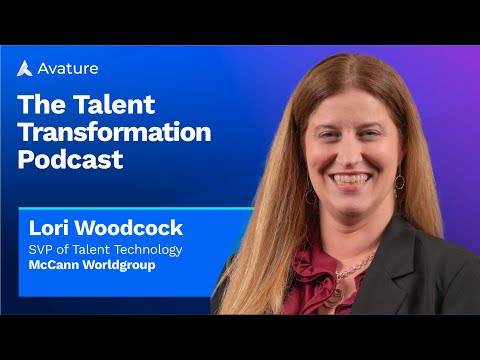



As technology becomes inseparable from how organizations attract, manage and develop talent, the relationship between IT and the business has never mattered more. In conversation with Avature Founder and CEO Dimitri Boylan, Lori Woodcock reflects on her 23-year journey at McCann Worldgroup and the evolving role of talent technology. Together, they explore how trust, shared language and foundational data can turn complexity into coherence.
5 key takeaways from McCann Worldgroup’s HR innovator
- True digital progress happens when business and IT speak a shared language, grounded in mutual understanding.
- People data is the connective tissue across systems, enabling insights that individual tools can’t deliver alone.
- Starting with strong foundational data enables long-term flexibility, even in best-in-class technology ecosystems.
- Interoperability matters as much as innovation, especially when delivering consistent employee experiences.
- Change management succeeds when leaders lead with empathy, addressing fear before process.
Designing Connection Before Complexity
Woodcock’s career places her squarely between technology and the business, a position she describes not as a compromise but as a vantage point. By building relationships across data, infrastructure and HR teams, she has learned to surface shared goals that might otherwise remain hidden. At McCann, those goals often come back to people data—how it flows, how it’s understood and how it creates value when systems are designed to speak the same underlying language.
That philosophy shaped McCann’s talent technology journey from the start. With no legacy HR systems to untangle, Woodcock and her team focused on building an ecosystem that could evolve with the organization. Rather than optimizing for short-term fixes, they prioritized architecture that supports analytics, insight and adaptability over time. The result is a technology environment where tools can change, but the experience remains coherent—nearly invisible to candidates and employees navigating their careers.
Just as critical is how change is introduced. Woodcock emphasizes listening first, recognizing that resistance often stems from fear of the unknown. By meeting people where they are and translating technology into outcomes they care about, she reframes transformation as support rather than disruption. In doing so, technology becomes not the driver of change, but its facilitator.
If you architect the system so that those things can speak to each other, then the results and analytics you can bring together are going to have a much more powerful impact.”
Lori Woodcock
Senior Vice President of Talent Technology, McCann Worldgroup
Listen to the full episode to hear Lori Woodcock and Dimitri Boylan discuss how empathy, data, and design can bridge the gap between technology and the business.