Dimitri
Welcome to another episode of the Talent Transformation Podcast.
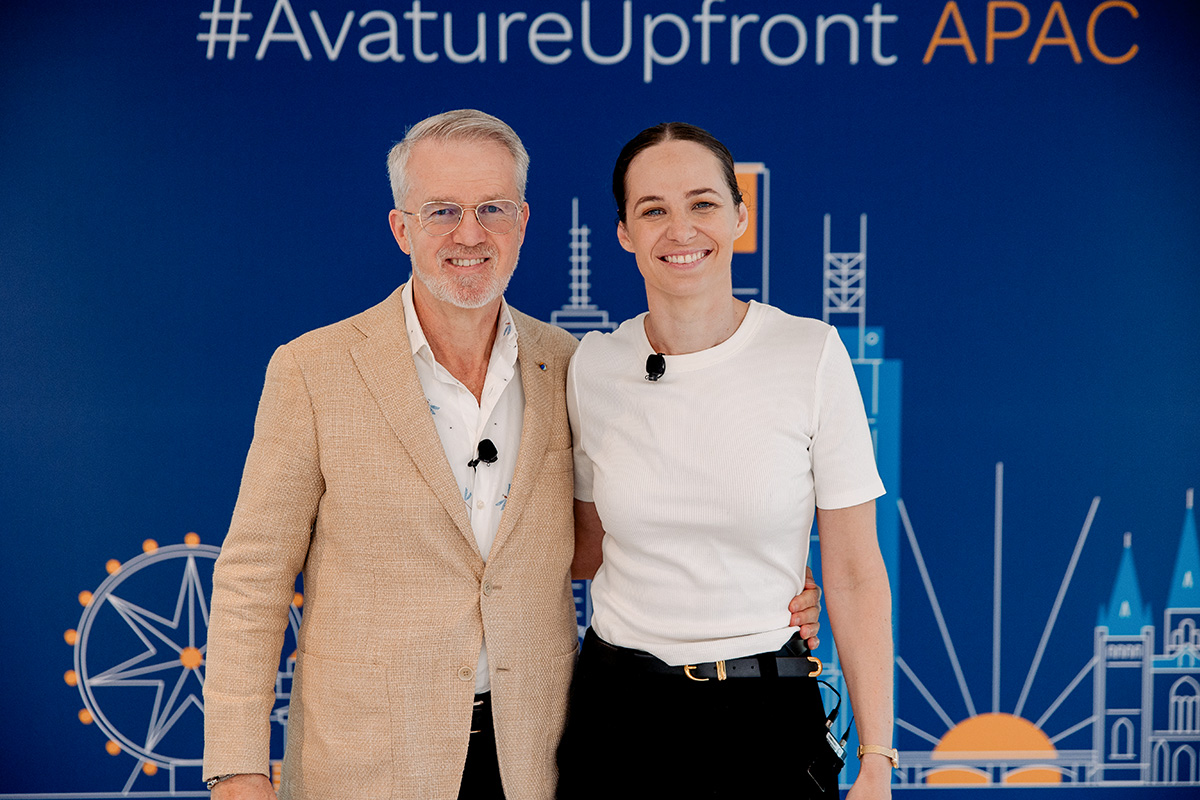
Today I am delighted to be joined by Chloe Dalton, one of Australia’s rare triple sport elite athletes. She won gold at the Rio 2016 Olympics. Chloe, welcome.
Chloe Dalton
Thank you very much for having me.
Dimitri
Thank you for joining us. Could you maybe give me a little intro, tell me a little bit about yourself, and help our listeners understand a little bit about your background?
Chloe Dalton
Yeah, sure. I grew up in Sydney playing every sport under the sun and had a dream as a seven-year-old kid, after watching the Sydney 2000 Olympics and watching Cathy Freeman win gold in the 400m, I wanted to become an Olympic gold medalist myself. I wanted to go to the games, but I wanted to win a gold medal. I played a whole range of sports as a kid and found a real love for basketball.
So I played in the WNBL, which was my first sport before a Google search that led me across to rugby sevens. Where I want a gold medal with the Aussie team at Rio in 2016, which is the first time that rugby sevens was included in the Olympics before seeing AFLW on television, which I don’t know how much you know about. You don’t know a lot about Aussie Rules. You know, you don’t see.
Dimitri
The Australians make up their own rules.
Chloe Dalton
It’s how we do things, you know. It’s a very niche sport in Australia. It’s like the Aussies. Well, certain states in Australia live and breathe Aussie Rules. But it’s a very Australian-centric sport, isn’t it? Yeah. Right. So if you, if you, you should go to what? Have you been to a game? No, you should go to a game.
Dimitri
Yeah. You know I, I, I grew up in New York. Yeah. Okay. So my only exposure to sort of non-American sports would be when I went to Ireland as a kid.
Chloe Dalton
Gaelic football.
Dimitri
Yeah. Well, yeah. Hurling.
Chloe Dalton
Yeah. Did you play?
Dimitri
No, I didn’t play it, but it was the most violent sport I’d ever seen. You know, but, and of course, my cousins played rugby in, in growing up in Ireland. So I knew rugby.
And so what are you doing now? You were pretty active in trying to sort of educate people and, get the environment to change so that more women can be successful in sports here in Australia. What’s the most impactful things you’re doing?
Chloe Dalton
Yeah. So, my platform that I started is called the Female Athlete Project. So we started that in 2020 during one of the Covid lockdowns. I started a podcast from the garage at my parents’ place, and what I wanted to do was create a platform that was all about sharing the stories of these female athletes, because I think there are so many athletes who deserve to be household names, but they haven’t been because they haven’t received the mainstream media coverage.
And the way that we’ve grown this platform is we made a really conscious decision that we wanted to address the visibility piece. I think with women’s sports, we could have picked a whole range of different avenues to address, and we decided we wanted to address the visibility piece because of the lack of coverage in the media. And so the social content that we put out is just about being able to provide people with really easily consumable and accessible information about what women in sport are achieving because I think if they can’t turn on the radio and hear it or watch it on the TV, on the nightly news, if they don’t see those things regularly, we want to be the place that people in Australia in particular, we’ve got a global audience, but in Australia in particular, they can come to our page and they know that where they’re always going to find their women’s sports news.
And I think the way that we’ve built this community, I touched on it just earlier when I was speaking, It’s been really great to see the way we’ve been able to build a community of people who love women’s sport and who love sport, but they actually just love seeing women existing in spaces that they haven’t before. And I think that’s a really great part of what we do, is that it’s about showing amazing female athletes achieving great things and challenging stereotypes and being trailblazers to show girls and women that you can go out and do that in any field, you know, like you were touching on recruiting women into business and tech and HR. It’s it’s it’s about harnessing the power of sport as a conversation to create change more broadly in society.
Dimitri
Yeah. In the corporate world, I remember, you know, one of our customers went out and said that their workforce was, was 10% female and that they were going to try and get it to be 50% female by 2025. This was a few years ago, okay. And it was a huge lift. I mean, I don’t think they achieved it.
I mean, it was probably, you know, impossible to do, because, you know, you have to start even with sports, you have to start at a young age to get people to be capable of participating at a certain level in sports or in business, too. I mean, in technology, for example, if the girls don’t, you know, study computer science in high school, it’s hard to move them into technology ten years later. Right. You have to get some fundamental background.
What are you doing? Is your program? I would imagine you start with young kids participating in some of these sports at a school level, where before there weren’t programs. I mean, for example, in the United States, I mean, we had a basketball team at my high school. We didn’t have a women’s basketball team. You know, we had a men’s basketball team. We had a men’s football team. We did have some women. We had a women’s tennis team and a men’s tennis team, and we had women’s track, a women’s track. We had men’s track, okay. But in some sports, there was absolutely no concept of women playing at all.
Now I’m 64 years old, so it’s probably changed a lot since then. But, you know, do you think that, your program is going to, is it a long-term objective, or do you think you’re really going to change the way sports are viewed here in Australia in the next couple of years?
Chloe Dalton
Yeah, I think it’s really important to address what you’re saying about it being a long-term thing. I think we’ve tried to be really specific with what we’re trying to achieve because, like, I’d love to change community sport into school sport for young girls and go and make an impact there. That’s a huge task in itself.
So what we’ve tried to do is we’ve tried to say we’re going to spotlight the stories and achievements of the elite female athletes so that people at a community level and young people see them and then have the opportunity to try and want to become them. I think if they see it and want to become it, that’s a whole challenge in itself about making sure that there are the right resources and things in place.
That’s not something that we’re currently addressing because I think I’ll spread myself way too thin if that’s what we try and do, you know what I mean? We’ve really chosen to focus in on that media side of it in order to try and inspire these young people and show them what they can be like.
You touched on the basketball example in the US. I’ve loved watching Caitlin Clark and Angel Reece come out of the college system. They’re huge names, and I would love to see over the next few years what the participation numbers in the US, in particular, look like at a high school and college level in terms of increasing—maybe not college, because college is very elite right in D1 and things—So, maybe at the high school level.
What that actually looks like in the US as a flow-on effect from so many young girls seeing Caitlin Clark and Angel Reece and Paige Beckers and all these names blasted everywhere. What the flow-on effect of that is going to be. And then it’ll bring its own challenges of, similar to what I touched on earlier, are there change rooms that are appropriate? Is there enough facilities and coaches and, you know, all of those things that then come?
Dimitri
Yeah, yeah. I say, you know, women’s sports and you spoke just now in our user conference a lot about, women in sports. And it’s interesting because our audience is HR professionals and they’re looking at women in business. Okay. As, you know, a challenging part of their job to develop female executives, to get women into technology roles and to do things like that. And it was interesting what you were talking about, about sport and, some of the data that you put up about how society makes it look like, it sort of rigs the field, you know, the simple fact that there were no statues of female athletes. I mean, I don’t know if anybody knew that in Australia until you told them that, right? But how that affects people.
And I think in the corporate culture our leadership has similar challenges. When you wanted to be an athlete, when you were younger, did you have any sense that becoming a professional athlete was going to be more difficult for you than for your brothers?
Chloe Dalton
Yeah, it’s a really good question. I don’t think as a kid it was something I was conscious of, but I think when I was setting these big goals about who I wanted to be when I grew up, I didn’t see being a professional athlete as a pathway.
It wasn’t something where I sat there and I kind of thought, well, that’s unfair, my brothers can do it and I can’t. It was kind of just felt like my reality. You know, there weren’t these competitions that existed for me to have that pathway. And I think filtering on down from there because it wasn’t available at the elite level and then the access to resources and facilities and coaches throughout that pathway as a young person were also severely impacted as well.
Dimitri
Yeah. So I guess as a child, you don’t think about it as much. But then when you get into your teenage years and you start becoming more aware of what’s going on around you, do you think there were key people in your life who just said to you, “Oh, listen, don’t worry about that. You can do everything that they’re doing.” Or do you think that you had to be sort of consciously working against the grain?
Chloe Dalton
Yeah, I think I probably had to work against the grain a lot. I had incredible people in my corner who supported me in a whole range of different scenarios. But I, I think there wasn’t even if they were supporting me to do it, they couldn’t create the professional competition. And they couldn’t they couldn’t change what we were getting paid.
So if I if I touch on the WNBL example. So my first professional sport that I played was in the Women’s National Basketball League. So the top domestic competition for basketball here in Australia and I think I was on a scholarship. I think I was getting maybe $1,500 a year or a semester. It would cover my petrol and that was it.
So I’d wake up at four in the morning. I was working at Virgin Active Gym in the city on Pitt Street in Sydney, and I’d wake at four in the morning, catch the bus, work from 5 a.m. to 2 p.m., and go to training all afternoon. I’d wake up the next day, go and study at university and do a pretty poor job of it. I just remember so clearly. One day, Mum came over to my house, and I couldn’t even afford bread, milk, and basic food for the fridge. I was obviously in a privileged position where my parents could help me and Mum took me to the shops and bought me everything that I needed to fill up the fridge.
But it was a pretty harsh reality of wanting to be this professional athlete, thinking it was going to be this amazing lifestyle when it just was… It was such a slog. And no, it wasn’t even close to what I thought it was going to be like.
Dimitri
Yeah, but isn’t it amazing? Because that didn’t stop you from doing it? Because when you really, when you are really passionate about something, a lot of that stuff seems to get downgraded in importance, right?
Let me go a little bit… You talked a little bit about your personal journey and how you moved from, you know, one sport to another. And I think you said something interesting when you were speaking, which was, about being comfortable not knowing everything about the next thing you were doing.
Because, you know, we talk about in HR, we talk about moving people around inside of an organization. We talk about career paths. And, you know, for me, you know, one of the points I was making about artificial intelligence was, I said, you’re not going to understand everything about it as it comes into your organization and it comes into your life, but you still have to figure out how to work with it.
And I thought there was a little parallel there because, you know, when you stay, when you do something for a long time, you just invariably get extremely comfortable. And when you move to another sport, how scared were you to move to that sport? And how did you deal with the fact that you were in one sport at a really high level and you knew everything, and then you took a step down, right, when you went into the next sport, how did you deal with that?
Chloe Dalton
Yeah, there was an immense amount of fear that came with that decision. I so clearly remember, I did my Google search, decided I wanted to try and play rugby sevens, but I then had to walk in and tell my basketball coach that I was quitting and I had that conversation and it didn’t go very well. She wasn’t very happy with me, and I just remember walking out of there, tears rolling down my face, and I got into my car and I thought, “Have I just made the worst decision of my life?” “Have I just thrown away everything I’ve worked for in my basketball career for something that might actually not pay off yet?”
And so, yeah, there’s a huge amount of questioning that comes with that. Right? Particularly when you’re comfortable and there’s a level of ego that comes with being good at something because you can feel confident in what you do, and you know that you’re good at what you do.
So, it’s pretty scary to then move into a space where you are the rookie. You are the person who doesn’t necessarily know things, but I’ve really, what I’ve leaned into knowing how stubborn I am at wanting to be successful. So when I started rugby sevens, while I was afraid that I’d thrown away my basketball career, I had so much faith in knowing myself that I wouldn’t let myself be mediocre at rugby.
I knew that I would continue working. I would find ways to be successful, even if it took me longer than I wanted it to take, I wasn’t afraid of it not working. I could have maybe missed opportunities, missed team selections, and things like that that were out of my control, but I had full faith in my own desire to learn and get better. I knew that over time, as long as I kept working, I was going to be okay.
Dimitri
And you liked learning.
Chloe Dalton
I loved learning.
Dimitri
I mean you had to like learning a lot, actually, because you were going into a place where you now had to double and triple the amount of learning, and you had to start learning again. And I think this is something that, for our corporate customers, as we talk about moving people throughout the organization and finding what they’re good at and what they want to do, is that A) they have to always be learning. But at the same time, they have to be sort of accepting of the idea that they will always have to be learning and that you will never actually know everything you need to know. And we try to create that environment that says you can move from, essentially, sport to sport. And you can go down in your knowledge, as long as you are curious, as long as you are entrepreneurial, as long as you are self-motivated. But then you do have to have an environment that supports that, right? I mean, you went from one sport to another. You’ve done it more than once.
And you know, was there any… I mean, obviously, there must have been periods of time when not only did you think you made a mistake, but other people thought you made a mistake. Did they come back and say, “Oh, you know, you’re trying to do this now and you’re having some success, but you really shouldn’t have done it?” I mean, did you have people that actually said that to you?
Chloe Dalton
Yeah, I think, probably what’s coming to mind is I remember when I made… So when I started playing rugby sevens and I was selected in our state team, like our regional team. And I remember there were 1 or 2 girls who didn’t get selected in the top team, who I think were questioning why I was there, because the coach at the time… I was still really raw. I was still really new to the game, but the coach at the time had seen that there was something in me that he thought he could develop.
And so I think the questions that I received were potentially more from people like that who are kind of saying, “hang on a second, why is she being given an opportunity when she hasn’t been doing this for very long?”
It was kind of that, that belief. And so I had to, in a way, kind of just like push that aside and just keep on the mission that I was focusing on, you know, of, continuing to go down that path. And, I just wanted to touch on the word curious that you said. I love the concept of staying curious.
I think that’s something that I’ve really. It’s been really important to me throughout my sporting career, but also more broadly, I think in a networking sense, as I speak at a lot of events and keynotes and panels and things, and I think a lot of my teammates. Right? A lot of athletes have to go to networking events. They might go to a fundraising dinner and sit on a table with sponsors. And some of them, it’s their worst nightmare because they’re so afraid of sitting on a table and not knowing what to say. And I think for me, that concept of being curious, if you’re curious about someone else’s life and you ask some questions, you’ll never find yourself in an uncomfortable position, you know?
Dimitri
Yeah. And I think that, the, the issues that we’re dealing with in, in business today is that businesses change. Our customers’ businesses are changing so rapidly that the role that each person plays in the organization can no longer be static. So they are struggling with identifying the skills that are core skills that translate to different roles. Identifying the skills that don’t translate and need to be enhanced actively as you move to a different role. And developing an understanding of the core attributes that allow you to be successful as you move from role to role. And you think about I think of curiosity as one of those, like you said, being curious, confidence apparently was important for you. Well, I would say determination, right?
Confidence can go up and down, but determination is something maybe that stays, you know, it’s just a very, very core, trait. And I guess you would describe yourself as a generally determined person, right? I mean, you’re focusing now on new things that are actually you going outside of sport now, really into the realm of the business of sports, the role of sports in society and how sports is projected from society.
So you’re really on another game. Do you see yourself as entrepreneurial?
Chloe Dalton
Yeah. I would have said no five or so years ago, but I really loved this journey into starting my own business and learning how to wear so many different hats as you have to do when you’re starting up a business. Right? And I am an athlete and a physiotherapist by trade, I guess. I have no media training, I have never… I have no business background.
And so it’s been this really steep learning curve once again into how do I actually run a media business and have people who come on board to work under me, and how do I now learn how to lead people and put systems and processes in place? These things are all almost every day of work at the moment is new to me, but it’s something that I find actually really refreshing, I really love… Yeah, I just really love the challenge of expanding and growing like you asked earlier, I do really love that concept of learning. I think it’s something that I’ve got from my mum, actually.
She took some time off work to raise the three of us kids. But when she returned to work, she started two different businesses. She’s just found what her passions are, and she’s kind of just taken a real leap into doing that. And I think that’s something I’ve probably learned from her. Like, I just love this concept, and probably the world we live in, right? Like if we look at the digital age, we look at the growth of AI and the expansion, there’s so much more freedom to actually take that leap.
Dimitri
Yeah. There is.
Chloe Dalton
to do something new and grow something that might not be your very traditional 9-to-5 type of role.
Dimitri
Yeah, absolutely. I mean our customers are moving through this period of high disruption now with artificial intelligence. And you look at the core skills that you need inside your organization and you need the curiosity. You need the desire to learn, you need the ability to check your ego and move into roles where you are not as good. And give yourself some amount of time to get good. You need to stay engaged with change and be comfortable around it. It seems like you’re really doing a pretty good job of that, so that’s that’s encouraging and exciting. Y
ou know, it’s it’s, it’s it’s great to have you in here. It was, you know, you spoke at the, in front of everybody here, and it was really nice to pass around that gold medal.
Chloe Dalton
Oh, cool. You got to see it. Did you try it on? You know you didn’t get to see it. We’ll find it off for you. Hopefully, no one’s run away with it.
Dimitri
Yeah, yeah.
Chloe Dalton
We’ve got it. We can secure the gold medal. Good result.
Dimitri
But, wonderful. Great to have you in. Thank you so much for coming in and chatting with us.
Chloe Dalton
Thank you so much for having me. It’s been great fun.